
Projects
Our projects reflect the depth of our expertise and the impact of our partnerships. Explore how we’ve helped clients decarbonise, innovate, and deliver lasting change across sectors.
All Projects

Temporary School Facilities Planning & Delivery
The Challange
A national government department initiated a project to deliver a new-build, modern secondary education facility as part of its Free Schools Programme. The development was planned over four phases and required the provision of a temporary modular school building to accommodate students during construction of the permanent campus, addressing immediate local pupil placement pressures.
Petro Safe was engaged to provide planning and technical support, including the preparation of a comprehensive Planning, Design and Access Statement (PDAS) to support the planning application.
While prior approval existed for the conversion of an on-site office building into a secondary school, detailed assessment confirmed that the structure was unsuitable for educational use without significant and cost-prohibitive refurbishment. As a result, a purpose-built school facility was identified as the most practical and efficient solution.
The primary challenge involved securing planning consent for a two-storey temporary modular building on land designated for industrial use, where a redundant structure was already present. The temporary facility was required to accommodate an initial intake of approximately 210 pupils, while ensuring it would not restrict or compromise the future development of the permanent school.
Petro Safe prepared the PDAS to support the application, providing a robust assessment against relevant planning policies, design principles, and technical standards, enabling informed decision-making and progression of the project.
The Solution
Petro Safe prepared a comprehensive Planning, Design and Access Statement (PDAS) incorporating all relevant technical studies and supporting assessments. The statement presented a clear project vision and phased development strategy, demonstrating how the temporary facilities would support delivery of the permanent school.
The submission justified the need for a temporary modular school to address the immediate shortfall in local pupil places and drew upon national planning policy supporting the efficient reuse of under-utilised brownfield land for essential community infrastructure. It also demonstrated full compliance with planning, access, and design requirements, ensuring the proposal met all regulatory expectations.
Supported by a robust and well-reasoned planning case, the application was positively received and approved unanimously by the local planning committee, securing consent and enabling progression of the long-term educational development for the area.
Anaerobic Digestion Plant Planning
The Challange
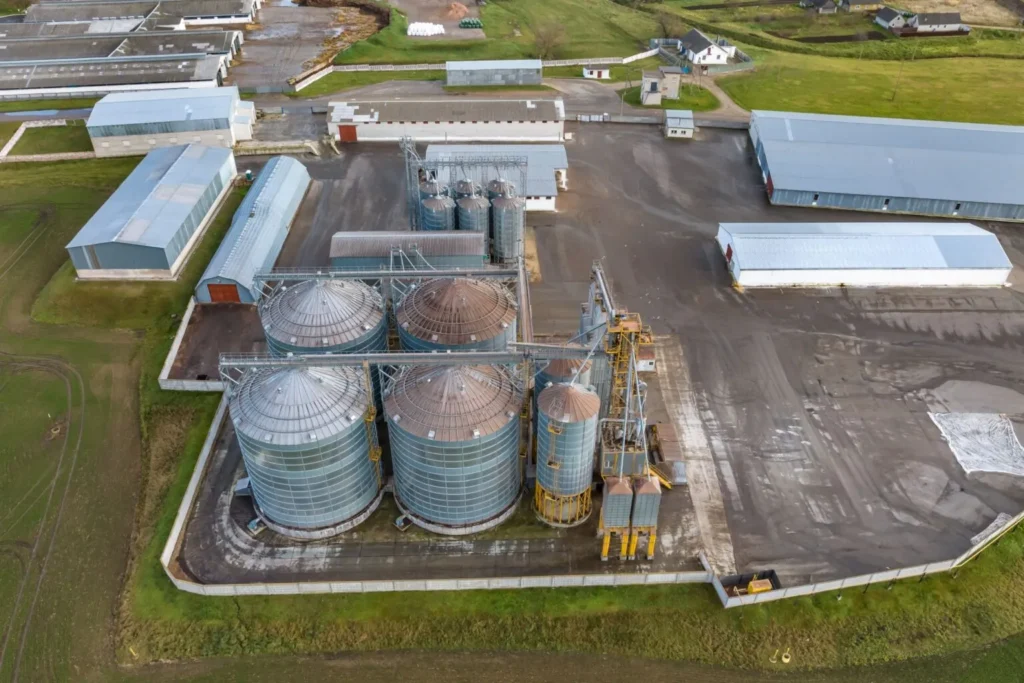
The client, a bespoke modular anaerobic digestion (AD) developer, required a solution to utilise waste effluent generated from distillery processes at an independent distillery located in a remote island environment. The proposed AD system converts distillery waste effluent into usable heat energy, which is circulated back into the distillery to support production operations. Treating the waste effluent on-site removes the need to transport waste by road tanker to port for off-island disposal, significantly reducing logistical complexity and environmental impact.
The modular AD system was specifically suited to remote and island locations, enabling the conversion of unwanted liquid residues into on-site bio-energy while reducing carbon emissions through decreased transport and replacement of fossil fuel energy. Bio-energy generation was designed to align directly with production requirements at the distillery, ensuring efficient and sustainable energy use.
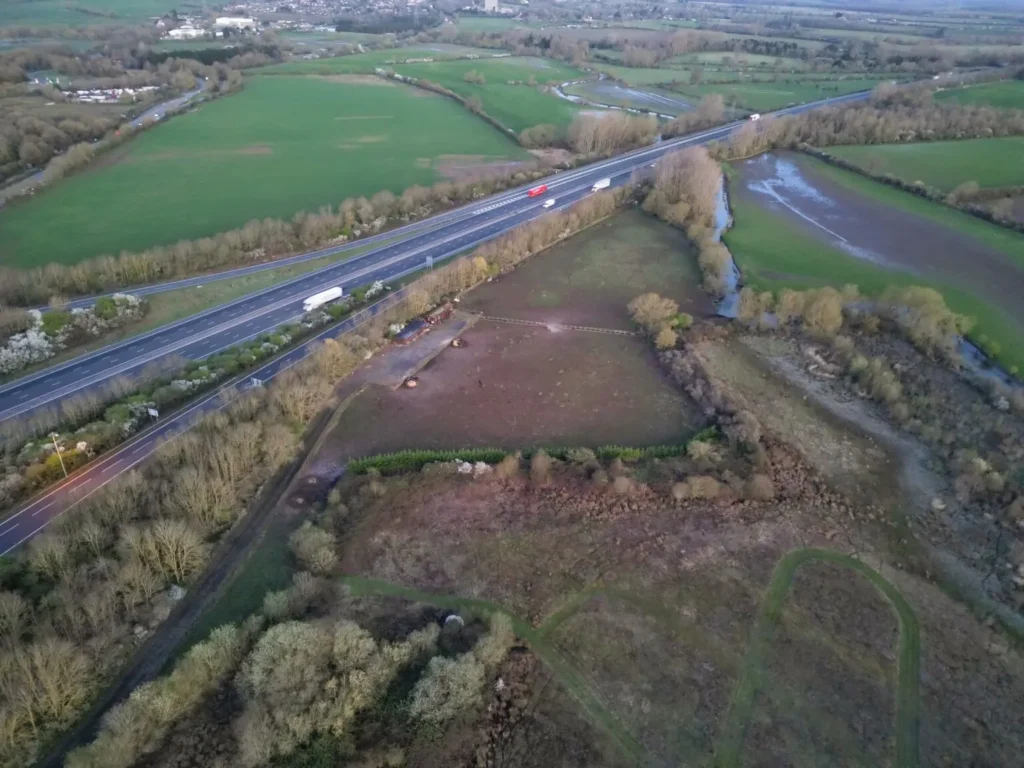
Clean water discharged from the AD plant was directed to a nearby bespoke Ecological Treatment System (ETS), creating a new wetland habitat and delivering biodiversity enhancement. The ETS was located within an environmentally sensitive area surrounded by multiple statutory designations, including Sites of Special Scientific Interest (SSSIs) and proximity to a Ramsar-designated site. Regulatory stakeholders raised concerns regarding potential impacts on protected species, particularly white-fronted geese and corncrakes.
Given the sensitivity of the location, the project required careful planning, detailed environmental assessment, and an innovative design approach. Through robust technical analysis and evidence-based justification, it was demonstrated that the proposed development would result in negligible environmental impact, satisfying both environmental regulators and the local planning authority and enabling progression of the project.
The Solution
Petro Safe undertook direct engagement with statutory consultees and the local planning authority, working closely with the wider project team to identify a practical solution that would enable the development to proceed. This collaborative approach focused on developing appropriate draft planning conditions that balanced regulatory requirements with project delivery objectives.
The local planning authority agreed to share draft planning condition wording, which was refined through continued consultation with statutory consultees to ensure a workable and proportionate solution. More detailed engagement was also carried out with environmental regulators to address recommended planning conditions and clarify the level of control required over the development, enabling concerns to be resolved and the project to move forward.
Blast-Rated Laboratory Building Design
The Challange
The client set an ambitious brief to design and deliver a 100 mbar blast-rated laboratory building that combined structural resilience with operational functionality. The facility was required to accommodate 17 precision-engineered steel modules, creating approximately 560 m² of high-performance space to support critical operations. Internally, the building incorporated a laboratory, control room, feed area, and plant room, all designed with shelter-in-place capability to protect personnel during extreme events.
In addition to the main structure, a six-module non-blast-rated mezzanine was designed adjacent to the building, providing essential access and support for HVAC systems critical to maintaining operational integrity.
The project scope covered the complete structural design, including superstructure design for all modules, performance specifications for blast-rated doors and windows, lifting analysis, hold-down systems, transit frames, and a robust substructure design comprising piles, pile caps, and ground beams. A comprehensive structural Revit model was developed, supported by detailed general arrangement drawings and fabrication-level steelwork and foundation details.
The project was further complicated by challenging site conditions. The brownfield location presented poor ground conditions, existing buried services, and tight spatial constraints. In addition, the requirement for large open spans of 12.15 metres placed significant demands on the roof structure and connection design, requiring a high level of engineering precision and structural performance to meet both blast resistance and operational requirements.
The Solution
To ensure the facility met demanding blast-resistance performance requirements, a single-degree-of-freedom (SDOF) analysis approach was adopted in line with industry best practice and recognized standards, including ASCE guidance and PIP STC01018. This ensured that structural performance criteria were robust, defensible, and fully aligned with blast design expectations.
Working in close collaboration with the wider project team, a fully coordinated superstructure and substructure design was delivered. Through the use of Revit-based modelling and a modular steel construction strategy, the design enabled accelerated fabrication, improved quality control, and a highly efficient construction programme.
Specialist coordination was also undertaken with suppliers of blast-resistant doors, windows, dampers, and louvres, ensuring that all protective elements were fully integrated into the design and delivered consistent, high-performance resilience over the facility’s operational life.
Challenging ground conditions necessitated a strategic foundation solution. A piled foundation system was identified as the most suitable approach, supported by comprehensive preliminary design development. Close collaboration between geotechnical and structural disciplines enabled optimisation of pile layouts, preparation of detailed specifications, and technical review of contractor proposals. Constraints including limited land availability, existing buried services, and civil works interfaces were carefully managed to ensure a safe, efficient, and buildable solution.
From concept through delivery, Petro Safe acted as a trusted technical partner, maintaining momentum across all project stages and meeting key programme milestones. The team adapted design development to fabrication priorities and construction sequencing requirements, ensuring continuous progress throughout delivery.
On site, Petro Safe provided hands-on technical assurance, supporting substructure works and carrying out detailed reviews of fabrication drawings to ensure compliance with specifications and design intent. This proactive and quality-focused approach safeguarded performance under challenging conditions and supported successful execution of the works.
As of late 2025, modular fabrication is underway and groundworks construction has been completed, marking a significant milestone toward delivery of a high-integrity, blast-resistant laboratory facility offering long-term operational reliability.
Embedding Process Safety in Semiconductor R&D
The Challange
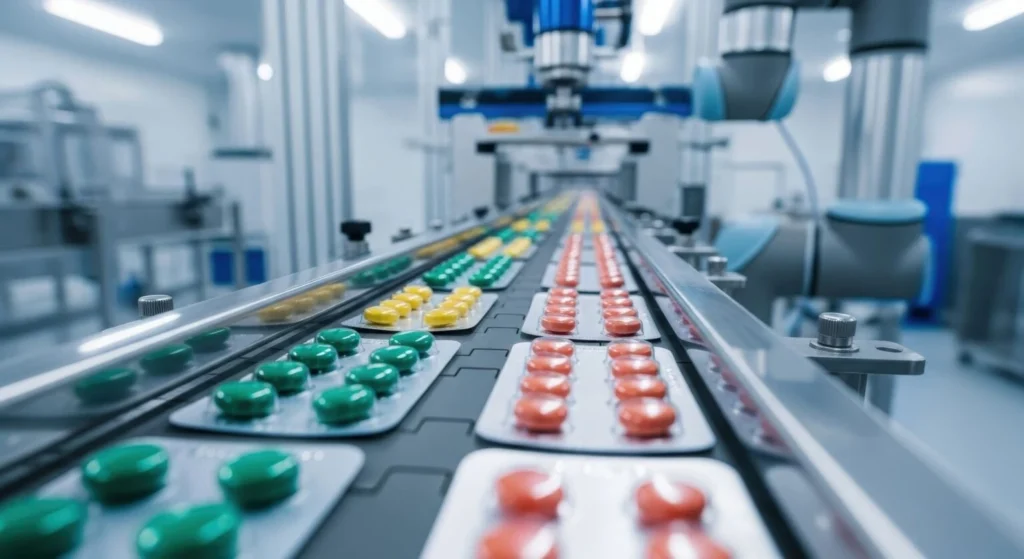
A leading research and development organisation had experienced significant growth, supporting both academic and commercial clients on a global scale. With more than 3,500 systems installed worldwide, the organisation had outgrown its existing premises and planned relocation to a new, purpose-built, world-class facility to support continued expansion and innovation.
Semiconductor research and development involves the use of a wide range of hazardous substances, including highly toxic, flammable, and pyrophoric gases, strong acids, solvents, and reactive chemical precursors. The inherent complexity and elevated risk profile associated with these materials required that process safety be embedded from the earliest stages of facility design, extending through detailed engineering, commissioning, and ongoing operation.
The Solution
Petro Safe supported the project from its early development stages, providing technical input during the preliminary assessment of the gas storage and supply building. This early-stage involvement focused on developing a compliant and robust design strategy, informed by industry best practice for gas separation and segregation. Particular attention was given to managing incompatibilities between gas species and ensuring appropriate separation from occupied areas, site boundaries, and ventilation intakes.
To further support the safety case, Petro Safe undertook consequence modelling using DNV PHAST to assess worst-case gas release scenarios, including catastrophic cylinder failure and the potential release of highly toxic materials through the ventilation system. The modelling results informed decision-making on the need for gas abatement systems, supporting a Best Available Techniques (BAT) assessment and enabling early progress toward Environmental Permitting. This evidence-based approach ensured that process safety considerations were fully integrated into both the design and regulatory strategy from the outset.
Embedding Process Safety in Semiconductor R&D
The Challange A leading research and development organisation had experienced significant growth, supporting both academic and commercial clients on a global scale. With more than
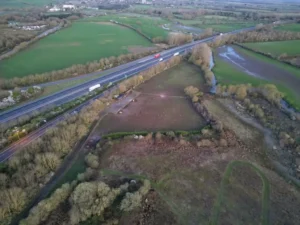
Blast-Rated Laboratory Building Design
The Challange The client set an ambitious brief to design and deliver a 100 mbar blast-rated laboratory building that combined structural resilience with operational functionality.
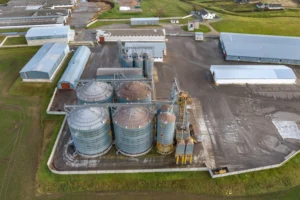
Anaerobic Digestion Plant Planning
The Challange The client, a bespoke modular anaerobic digestion (AD) developer, required a solution to utilise waste effluent generated from distillery processes at an independent

Temporary School Facilities Planning & Delivery
The Challange A national government department initiated a project to deliver a new-build, modern secondary education facility as part of its Free Schools Programme. The